
CULTURE, TRADITION, DIETARY HABITS
*The full text of this article is available as PDF below.
The constitution of Bulgaria provides for freedom of religion, and other laws and policies contributed to the generally free practice of religion. However, the constitution designates Eastern Orthodox Christianity as the “traditional” religion, exempting it from having to register in court as required for all other religious groups.
Bulgaria has a rich and century-old cultural history. With the adoption of Christianity in the 9th century, Bulgarian culture became an integral part of the European culture, but nevertheless its authenticity is preserved till nowadays.
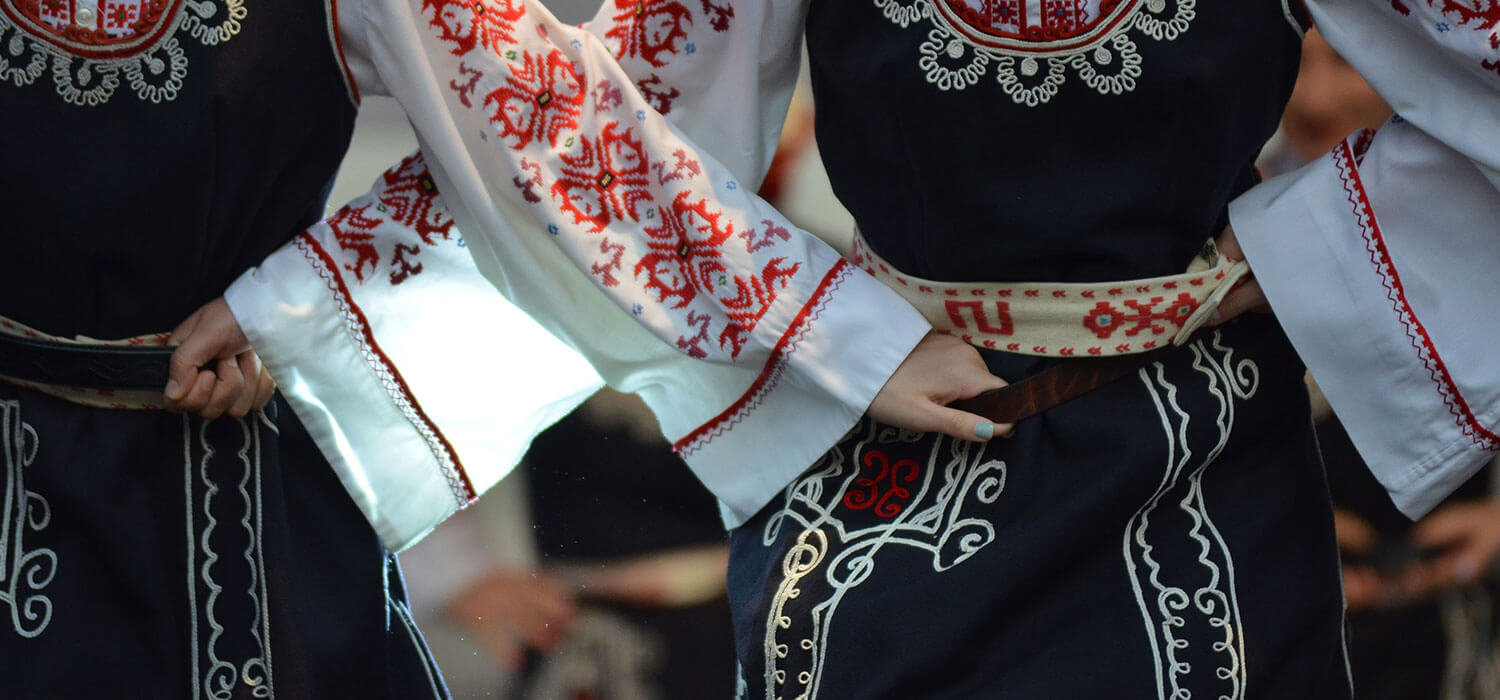
There are many Bulgarian traditions and celebrations that often get a “Really?!” reaction from foreigners. Many of them originate from pagan times or have Christian roots, and have been strictly followed for centuries. Bulgarians tend to be very proud of their traditions, culture and heritage. Their love for it is reflected in everything from food and songs to dances and jewelry.
On this day, remembered in history as Bulgaria Liberation Day, the people of Bulgaria pause for a tribute. The first time of marking March 3 occurred in 1880, in honor of Enthronement of Russian Emperor Tzar Alexander the Second – Tzar Osvoboditel, meaning Tzar Liberator. Since 1888, March 3 has become Bulgaria’s Day of Liberation and it was pronounced a National Holiday in 1978. Since 1990 the date March 3 is included in the list of Bulgaria’s official holidays, according to a parliamentary decree.
On 6 January each year, Christian Bulgarians mark Epiphany and the Baptism of Jesus, locally known as Jordan’s Day (Йордановден, Yordanovden), with some rather manly traditions that make use of the icy winter waters. According to one custom, a priest throws a cross into a river or lake and all willing men jump after the cross in a competition to reach and retrieve it. The saying goes that whoever catches the cross will be happy and healthy throughout the year.
Another Jordan’s Day tradition is the icy round dance. Rather than chasing a cross, this involves men dancing in a freezing river to traditional Bulgarian tunes. This custom is best associated with the town of Kalofer, though it has been practiced in other places as well.
While carnivals are widespread around the world before Lent, Bulgaria’s Kukeri (кукери) stand out with their scary costumes which look like they have come from an elaborate horror production. An ancient ritual to drive away the evil spirits, the procession of the Kukeri is celebrated either around New Year’s Eve or on Cheesefare Sunday, just before Lent.
The Bulgarian Kukeri are unmistakable thanks to their incredibly creepy masks, the huge bells on their belt and the costumes made of thick animal pelts. A great place to see the variety of costumes is the city of Pernik on the days of the Surva masquerade festival in late January or early February each year.
While the Western tradition of Valentine’s Day has thoroughly invaded Bulgaria in the last few decades, every Bulgarian knows that 14 February of each year is actually the time for another, more traditional local festival. Trifon Zarezan, or Vine-growers’ Day, is less about loving a person… and all about loving wine!
Mid-February is usually the time when vines are cut to ensure proper growth and an abundant harvest in autumn. Due to this, the traditional cutting of the vines has evolved into the holiday of Trifon Zarezan, a celebration of fertility and Bulgarian wine’s magical qualities. Needless to say, singles and even many couples prefer Trifon Zarezan to Valentine’s Day, and for a good reason…
In Bulgarian folklore, the first day of March is regarded as the beginning of spring. March is imagined in the shape of the mythical grumpy old lady Baba Marta (Баба Марта, “Granny March”) and deeply associated with the red-and-white yarn adornment called Martenitsa (мартеница). On 1 March every year, Bulgarians give a Martenitsa to each of their friends to congratulate them on the beginning of spring.
And when you see a blossoming tree or a stork, you’re supposed to tie the Martenitsa to the tree or place it under a rock, respectively. As a result, in March basically all of Bulgaria is covered in red and white to welcome the warmth of springtime.
Gergiovden is the most celebrated name day in Bulgaria, with 180 000 people bearing the saint’s name or a derivative of it.
In the Bulgarian cultural calendar Gergiovden is one of the biggest holidays. It is connected with a lot of rituals for obtaining health and fruitfulness for the people, animals and fields.
The most important ritual on Gergiovden is, without a doubt, the sacrificial lamb. If a family doesn’t slaughter a lamb on that day they are considered out of the faith and out of the community.
Depending on the region, the lamb is either slaughtered in the house, making sure the blood is sprinkled on the walls or slaughtered under the trees or near a river. The lamb’s blood is also spread on doors and corners of the rooms and even the children’s faces, so that they will be healthy during the year.
Usually, the lamb is roasted whole, and after cooking it is brought to the church to be sanctified.
In small villages, the feast is usually for the whole community. It is done on a green filed near a church. After sanctifying the field people bring the cooked lambs, ritual breads made with the dew water gathered at morning, fresh milk, cheese, yogurt, fresh garlic and so on.
In a few isolated villages in the rolling Strandzha Mountains near the Turkish border, a mystical ritual has survived till the present day. On the night of Saints Constantine and Helen’s Day, villagers gather on the square to dance – barefoot – on burning embers. Reportedly, the dancers (called nestinari, нестинари) descend into a state of trance induced by a sacred drum, explaining the complete lack of pain felt by the participants.
The tradition of Nestinarstvo or Anastenaria combines Eastern Orthodox principles with more ancient pagan rituals. Curiously, it is practiced by both ethnic Bulgarians and the former Greek population of some of the villages in Strandzha.
The meal should traditionally have an odd number of dishes in it (normally 7, 9 or 11) and an odd number of people sitting around the table. (Salt, pepper and sugar can count as separate dishes!)
Straw is often put under the tablecloth and you might even bring a wooden plough into the house and put it behind the door! These are meant to help you have good crops during the next year.
There’s a special round and decorated loaf of bread called ‘pita’ which has a coin baked in it. If you find the good you’re meant to have good luck for the next year! The bread is normally cut by the oldest person at the meal and they hand it around the table.
It’s normally a rich vegetarian meal and includes dishes made of different such as beans soup, ‘sarmi’ cabbage leaves stuffed with rice, peppers stuffed with rice, boiled wheat with sugar and walnuts, different kinds of pastries (cheese, pumpkin and sweets pastries soaked in syrup), some kolaks, lots of fruits and nuts like dried plums, dried apricots, oranges and tangerines and ‘oshav’ a dried fruit compote.
Following the Christmas Eve meal some people will go to a Midnight Mass service. You might also hear Koledari (carol singers) which are normally young men who go carol singing dressed in traditional clothing. The singing can only start after midnight. The singers often go round singing all night, so the sun never catches them! When they reach a house they sing ‘the house song’ praising and wishing the house well. Having the Koledari visit your home is meant to be good luck. The songs are often in two parts with half of the singers singing the song and then the other half repeating it back. After the singing, the head of the house will give the Koledari food to thank them for singing. The special foods include ‘Koledni gevreci’ (round buns) and ‘banitsa’ (a layered pastry filled with cheese).
Christmas Trees now popular in Bulgaria and towns are decorated with Christmas lights. Some people will still have a traditional Yule Log (normally from an oak, elm or pear tree) known as a ‘badnik’ or ‘budnik’ which is brought into the house on Christmas Eve.
Santa is known as ‘Dyado Koleda’ (Дядо Коледа) which means Grandfather Christmas.
In Bulgarian Merry Christmas is ‘Vesela Koleda’.
Easter traditions in Bulgaria are a derivative of the Eastern Orthodox Church rituals. As the Bulgarian name implies “Velikden” (Great Day), Easter is one of the most significant holidays in the Bulgarian calendar and starting with Palm Sunday, the holy week leads up to the Great Day. In tune with worldwide Orthodox traditions, bright red colored eggs and Easter breads known as “kozunak” are the prominent symbols of Easter in Bulgaria.
At midnight on the Saturday before Easter Sunday, people gather at the church with red painted eggs and bread. The priest proclaims three times “Christos voskrese” (Christ has risen) and the congregation replies “Vo istina voskrese” (Indeed he has risen). After a special sequence of services, the clergy blesses the breads and eggs brought by the people.
The Bulgarian good luck crack is a unique Easter tradition in Bulgaria. Eggs are cracked after the midnight service and over the next few days. People take turns in tapping their eggs against the eggs of others, and the person who ends up with the last unbroken egg is believed to have a year of good luck.
Bulgarians love their folklore, the wackier the better, so if you have a weakness for wailing Balkan music, archaic pagan rituals, lots of shots of the national spirit, rakia, and some whirling dervish dancing, Bulgaria’s probably a safer bet for fulfilling your folksy fantasies than, say, Tuscany or the south of France.
The Macedonian influences around Bansko make this a good area to start your pilgrimage into the wild world of folklore. For a crash course, head straight to Pirin Sings Folk Festival at the Predel Pass in August, bringing together thousands of musicians and dancers. Further east, in May, there’s the Gathering of the Beautiful Trakiya in Haskovo, and during September, the Thracian Festival in Madzharovo.
Bulgaria is famous for its wonderful folk music that is so noteworthy that it was sent into space by NASA. The most exciting folklore festivals in Bulgaria are those in Koprivshtitza and in Predela. Through the music, singing and dancing you will touch the unique Bulgarian folklore art. You could not forget this experience !
The National Fair of Bulgarian Folklore Art has been holding in the town of Koprivshtitza since 1965. Every fifth year in summer the region becomes a center of folklore celebrations. Ensembles from all ethnographic areas in Bulgaria take part in the Koprivshtitza festival. Concerts are played in the open near Koprivshtitza performing the unique Bulgarian singing and dancing on 8 stages. Only the best performers from every region participate in the fair. An interesting part of the celebrations is the review of authentic Bulgarian national costumes and exhibition of Old Bulgarian crafts. In the evening in the center of Koprivshtitza foreign folklore ensembles perform traditional Bulgarian folklore. The Folklore Festival in Koprivshtitza is among the most impressive, exciting and important events in Bulgarian cultural life. It gathers at one place the best of Bulgarian folklore and contributes for its preserving and popularizing all over the world.
Bulgarian cuisine is hearty, grilled or stewed, and accompanied with huge salads. In recent years many Bulgarians have been attracted by vegetarian and healthy diets, but here we take a look at an average day of eats for a typical Bulgarian.
Start the day with something cheesy or deep fried
If we turn a blind eye to the latest healthy lifestyle trends, Bulgarians traditionally start the day with fat, pastry, cheesy or deep fried breakfast. Try banitsa (baked pastry with egg and cheese filling) at any local bakery – just follow the inviting smell in the morning. Get your hands on a mekitsa (deep fried doughnut-like pastry delight usually eaten hot) for a Bulgarian homey experience.
Skip the brunch
Eating brunch is an unknown concept for Bulgarians. When they have had their hearty breakfast, they just don’t need another meal until lunch. A few food venues have tried to serve brunch in Sofia but the prevailing reaction is raised eyebrows.
Have a quick lunch
Most restaurants have a daily lunch menu offering freshly cooked food at low prices. Lunch is often eaten quickly and on the whole it is not considered an important meal. Bulgarians love salads and often eat only a salad. You might be surprised by the huge portions they are served – it is not unusual to get 0.5 kg (1.1 lbs) of salad in a huge bowl, a quantity shared by three in other parts of the world. Shopska salad comprises of tomatoes, cucumbers, fresh or baked peppers, and Bulgarian feta cheese. Ovcharska salad adds some ham and hard yellow cheese to it. Soups are also a popular choice – try the chicken soup, bean soup, and the cold summer tarator soup (made of cucumbers, yogurt, dill, and walnuts).
Eat a huge dinner
Dinner is the main meal of the day with huge portions, long talks around the table with cup alcohol. Rakia is the strong, national drink, often home-distilled using plums, apricots, pears, grapes, and other fruit. Bulgarian wine is winning international awards and offers some unique varietals to taste (ask at the restaurant for muscat, pamid, Melnik 55, and mavrud). This is the time of day to order grilled meat (kyufte, kebapche)
Bulgarian Gastronomy
Bulgarian cuisine (Bulgarian: българска кухня, romanized: bǎlgarska kuhnja) is a representative of the cuisine of Eastern Europe. It shares characteristics with other Balkan cuisines. Bulgarian cooking traditions are diverse because of geographical factors such as climatic conditions suitable for a variety of vegetables, herbs and fruit. Aside from the vast variety of local Bulgarian dishes, Bulgarian cuisine shares a number of dishes with Persian, Turkish, and Greek cuisine.
Bulgarian food often incorporates salads as appetizers and is also noted for the prominence of dairy products, wines and other alcoholic drinks such as rakia. The cuisine also features a variety of soups, such as the cold soup tarator, and pastries, such as the filo dough based banitsa, pita and the various types of börek.
Main courses are very typically water-based stews, either vegetarian or with lamb, goat meat, veal, chicken or pork. Deep-frying is not common, but grilling – especially different kinds of sausages – is very prominent. Pork is common, often mixed with veal or lamb, although fish and chicken are also widely used. While most cattle are bred for milk production rather than meat, veal is popular for grilling meat appetizers (meze) and in some main courses. As a substantial exporter of lamb, Bulgaria’s own consumption is notable, especially in the spring.[1]
Similarly to other Balkan cultures the per capita consumption of yogurt (Bulgarian: кисело мляко, kiselo mlyako, lit. “sour milk”) among Bulgarians is traditionally higher than the rest of Europe. The country is notable as the historical namesake for Lactobacillus bulgaricus, a microorganism chiefly responsible for the local variety of the dairy product.[2]
Bulgarian cuisine shares a number of dishes with the Middle Eastern Cuisine as well as a limited number with the Indian, particularly Gujarat cuisine. The culinary exchange with the East started as early as the 7th century, when traders started bringing herbs and spices to the First Bulgarian Empire from India and Persia via the Roman and later Byzantine empires.[3] This is evident from the wide popularity of dishes like moussaka, gyuvetch, kyufte and baklava, which are common in Middle Eastern cuisine today. White brine cheese called “sirene” (сирене), similar to feta, is also a popular ingredient used in salads and a variety of pastries.
Bulgarian honey
Bulgarian honey is very high quality honey, and its taste and nutritional values are impressive. The country produces many kinds of honey and bee products – acacia, herbal, pine, honeydew and polyfloral honey.
The different regions of the country produce different kinds of bee products depending on their natural resources. Some herbs are found only in Bulgaria and there are also some rare or endangered plants here. This makes Bulgarian honey delicious and very unique. It also increases its healing qualities.
Bulgaria produces very high quality propolis with proven healing powers. Propolis has antibacterial and anti-inflammatory properties and also stimulates the immune system. The propolis produced in the region of the Rodopes is of the highest quality.
Yoghurt
Yoghurt is a traditional Bulgarian product. The microorganism responsible for the fermentation of the milk bears the name “Lactobacillus bulgaricus” .
This dairy product has a very pleasant taste and is used in the recipes for many beloved Bulgarian dishes: tarator, banitsa, snezhanka salad and as topping for some main dishes as well as a soup thickener. In addition to its excellent taste, it is also beneficial to good health. Studies have shown that it has anticancer effect.
According to some legends, yoghurt has been around since Thracian times. The Thracians learned to add sour sheep’s milk to fresh milk in order to make it keep longer. Therefore a product named “prokish” or leavened milk was created. Other theories associate yoghurt with the Bulgars and the drink “kumis”, a drink made from horse milk.
Colorful salt/sharena sol
Colorful salt is the most popular Bulgarian spice mix that has been used in Bulgarian cuisine for centuries. It has a pleasant, mild, and aromatic flavor that enhances the taste of many meals. The key ingredients in sharena sol include paprika, salt, thyme, cumin, basil, dried fenugreek leaves, and summer savory.
It is recommended to put Colorful salt on bread, potatoes, fries, vegetables, or cheese. Interestingly, although sharena sol is translated as colorful salt, salt isn’t a required ingredient and can be omitted from the spice mix.
Flat sausage/lukanka
The most famous cured meat product in Bulgaria is known as lukanka, a traditional, aromatic sausage made with a mixture of minced pork and veal. The sausage is usually heavily spiced with salt, black pepper, hot and sweet peppers, cumin, nutmeg, and coriander.
The choice and amount of added spices is highly variable and usually depends on the region. The casing for lukanka is usually made from cows’ or pigs’ intestines, and once completed, it is usually pressed on both sides to develop its traditional, flat shape.
Subsequently, it is hung in a dry and ventilated area, where it is dried for at least one month. If it is not completely dried, the sausage can be grilled or fried, while the dried version is usually sliced and served as a cold starter. Lukanka is consumed throughout the country, but the two most prominent varieties are known as Karlovska lukanka and lukanka panagyurska.
Wine
Grape growing and wine production have a long history in Bulgaria, dating back to the times of the Thracians. Wine is, together with beer and grape rakia, among the most popular alcoholic beverages in the country.
Viticultural regions in Bulgaria:
Bulgarian Official Holidays
1 January – New Year’s Day
3 March – National Holiday /Bulgaria’s Liberation from the Ottoman Empire/
1 May – Labour and International Worker’s Solidarity Day
6 May – Gergyovden (St. George’s Day), and the Bulgarian Army’s Day
24 May – Bulgarian Education and Culture, and Slavic Script Day
6 September – Unification Day
22 September – Independence Day
1 November – Day of the Bulgarian Enlighteners (Holiday for all educational institutions)
24 December – Christmas Eve
25, 26 December – Christmas Days
Easter Holidays– 4 days /Good Friday, Holy Saturday, Easter Sunday and Monday/ according to the Orthodox calendar of the year